















When sourcing PCIe 3.0 NVMe SSDs in bulk, buyers often notice that products with the same interface and nominal capacity can carry different price tags. For example, a 512GB PCIe 3.0 NVMe SSD from one manufacturer may come with a different quotation than an identical-sounding drive from another supplier, even when both advertise similar peak read and write speeds (such as up to 3,000/2,900 MB/s).
For wholesalers, distributors, PC builders, and OEM buyers, understanding why these price variations occur is essential. These differences are usually related to hardware configuration, NAND flash selection, controller design, DRAM architecture, and product-specific firmware and testing requirements.
Quick Answer: What Affects PCIe 3.0 NVMe SSD Prices?
PCIe 3.0 NVMe SSD prices are mainly affected by NAND flash type and configuration, controller selection, DRAM architecture, storage capacity, firmware requirements, testing standards, and order quantity. For bulk buyers, the final quotation also depends on capacity mix, customization, packaging, and component availability.
This guide breaks down the core cost drivers behind PCIe 3.0 NVMe SSD pricing, how capacity relates to cost, how bulk order requirements shape quotations, and which technical details buyers should verify before placing an order.
What Determines the Price of a PCIe 3.0 NVMe SSD?
The price of an NVMe SSD is influenced by its bill of materials (BOM), manufacturing requirements, and component sourcing conditions. Two drives sharing the same PCIe 3.0 interface can have different production costs based on several internal factors.
1. NAND Flash Type and Configuration
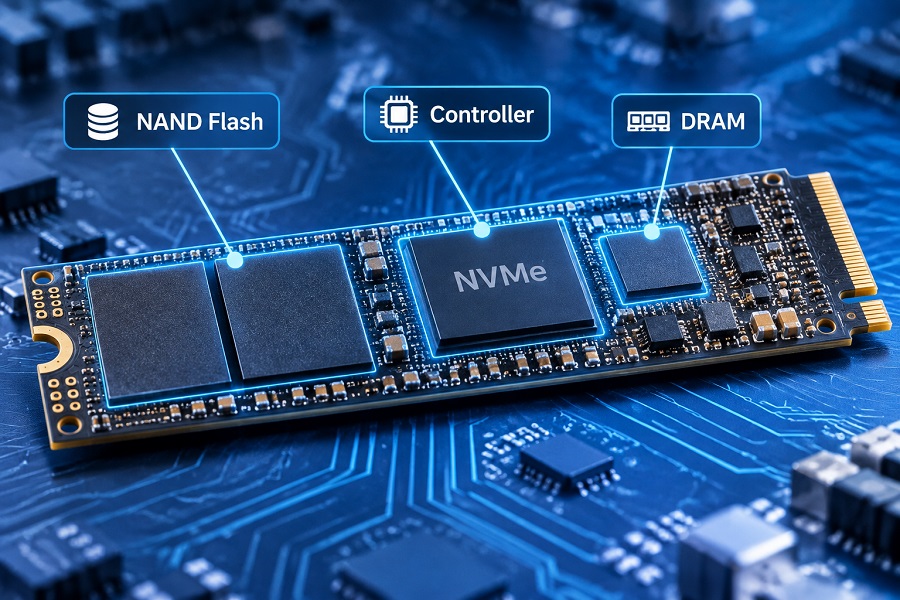
NAND flash is one of the major cost components in an SSD. Different NAND cell types, such as TLC and QLC, offer different balances of cost, endurance, and performance.
Endurance specifications, component quality requirements, and sourcing conditions may also influence NAND selection and overall product cost. The NAND configuration can therefore affect both the manufacturing cost and the specifications of the finished SSD.
2. SSD Controller and Hardware Design
The SSD controller acts as the brain of the drive, managing flash translation layers, error correction code (ECC), and other important data management functions.
Controller pricing varies according to supported features, performance capabilities, NAND compatibility, and availability. Different controller solutions may also require different PCB designs and firmware configurations, which can influence overall production costs.
3. DRAM vs. DRAM-less Architecture
Whether an SSD incorporates dedicated volatile memory influences its hardware configuration and manufacturing costs.
- DRAM-equipped SSDs: Include dedicated memory to support the SSD's mapping operations. This can help improve performance in certain workloads, although actual results depend on the complete hardware configuration.
- DRAM-less SSDs: Do not include a dedicated DRAM chip. Some NVMe designs support Host Memory Buffer (HMB), which allows the SSD to use a small portion of host system memory for mapping-related operations.
Buyers should evaluate the complete SSD configuration rather than assuming that DRAM alone determines performance or price.
4. Firmware Optimization and Testing Standards
Firmware controls important SSD functions, including data management, wear leveling, and communication with the host system.
Custom firmware adaptations for specific OEM environments may require engineering validation and compatibility checks. Factory testing requirements, such as burn-in testing and functional validation, also contribute to manufacturing costs.
How Capacity Affects PCIe 3.0 NVMe SSD Pricing
SSD pricing does not scale in a strictly linear fashion relative to capacity. A 1TB drive does not automatically cost twice as much as a 512GB model. NAND die configurations, package density, component availability, and manufacturing yields can all affect the cost difference between capacities.
The following table shows the rated endurance of Taimi's TME38MBXXX PCIe 3.0 NVMe SSD series alongside several capacity-related pricing considerations.
| Capacity | Endurance (TME38MBXXX Series) | Key Pricing Considerations |
|---|---|---|
| 128GB | 70 TBW | NAND availability, package configuration, and product demand |
| 256GB | 140 TBW | NAND density, component selection, and target price |
| 512GB | 240 TBW | NAND configuration, controller compatibility, and performance requirements |
| 1TB | 480 TBW | NAND package density, component availability, and cost per gigabyte |
| 2TB | 960 TBW | NAND configuration, PCB design, and capacity-related component costs |
Note: The TBW values above are based on Taimi's TME38MBXXX series specifications. Actual endurance ratings may vary by model and capacity. These figures are product-specific specifications, not universal PCIe 3.0 standards.
How Do Bulk Order Requirements Affect PCIe 3.0 NVMe SSD Pricing?
When requesting bulk quotations, buyers often find that unit pricing is influenced by specific order parameters beyond base hardware specifications.
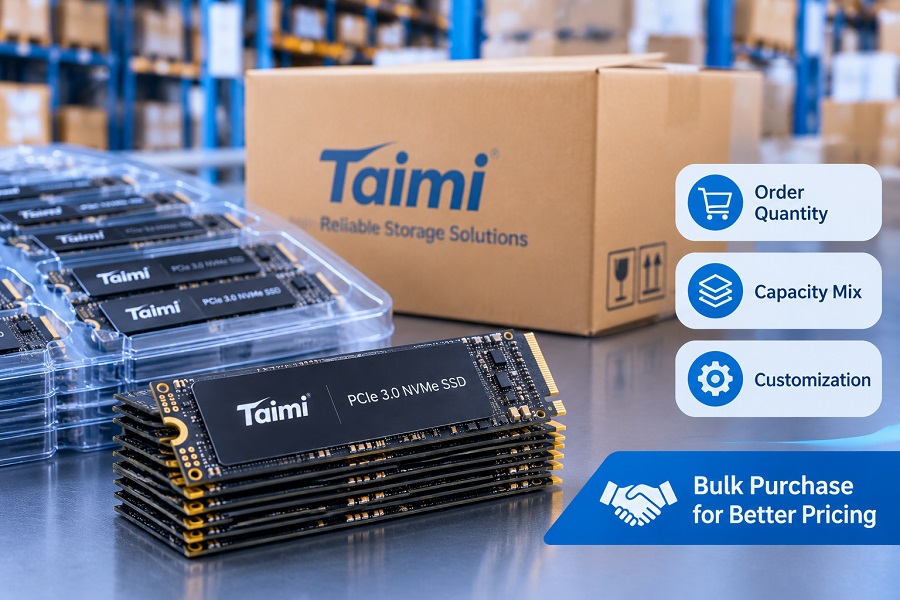
Order Quantity
Larger orders may allow more efficient component sourcing and production planning. However, the actual unit price depends on the model, configuration, order quantity, and other purchasing requirements.
For a broader overview of the factors affecting bulk SSD quotations, see our guide on SSD Wholesale Pricing: What Affects Bulk Order Costs.
Capacity Mix
Orders combining multiple capacities, such as 128GB, 256GB, 512GB, 1TB, and 2TB, require separate component allocation and BOM evaluations. The quantity of each capacity can therefore influence production planning and the final quotation.
Customization
Specific OEM branding, specialized packaging, unique firmware configurations, or additional testing requirements can affect the final quotation. Buyers should communicate these requirements before requesting a formal price.
Evaluating PCIe 3.0 NVMe SSD Specifications
When comparing quotations from different suppliers, buyers should look beyond headline read and write speeds and verify the core hardware specifications.
- NAND Flash: Confirm the NAND type and whether the supplier maintains consistent component standards.
- Controller Model: Check the specific controller part number to understand compatibility and performance characteristics.
- DRAM Design: Verify whether the configuration uses dedicated DRAM or a DRAM-less architecture.
- Performance Context: Ensure that advertised speeds, such as sequential speeds of up to 3,000/2,900 MB/s, reflect comparable test conditions and workloads.
For detailed benchmarks and supplier comparison criteria, refer to our guide: How to Compare SSD Supplier Quotes for Bulk Orders.
Essential Information for a PCIe 3.0 NVMe SSD Bulk Quote
To receive an accurate and actionable quotation, buyers should prepare the following information when contacting suppliers.
- Product Type and Interface: PCIe Gen3 x4, NVMe 1.4, and M.2 2280 M-Key form factor, where applicable.
- Required Capacities: Estimated volume breakdown across available capacities, such as 128GB, 256GB, 512GB, 1TB, and 2TB.
- Hardware Preferences: Target DRAM configuration (DRAM-based or DRAM-less), if specified, or the intended application requirements.
- Target Application: Intended use, such as desktop upgrades, laptop assembly, or OEM projects.
- Order Volume: Estimated quantity per shipment or project phase.
- Branding and Packaging: Standard bulk packaging, custom retail packaging, or OEM requirements.
- Destination and Warranty: Target destination market and required warranty terms.
Providing these details upfront helps suppliers evaluate the required configuration, confirm component availability, and prepare a more accurate quotation.
Sourcing PCIe 3.0 NVMe SSDs with Taimi
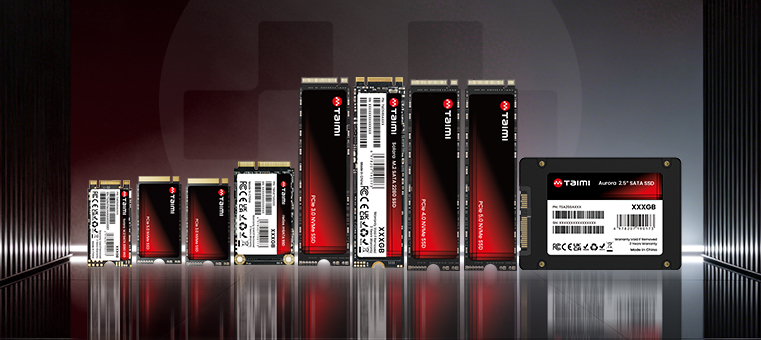
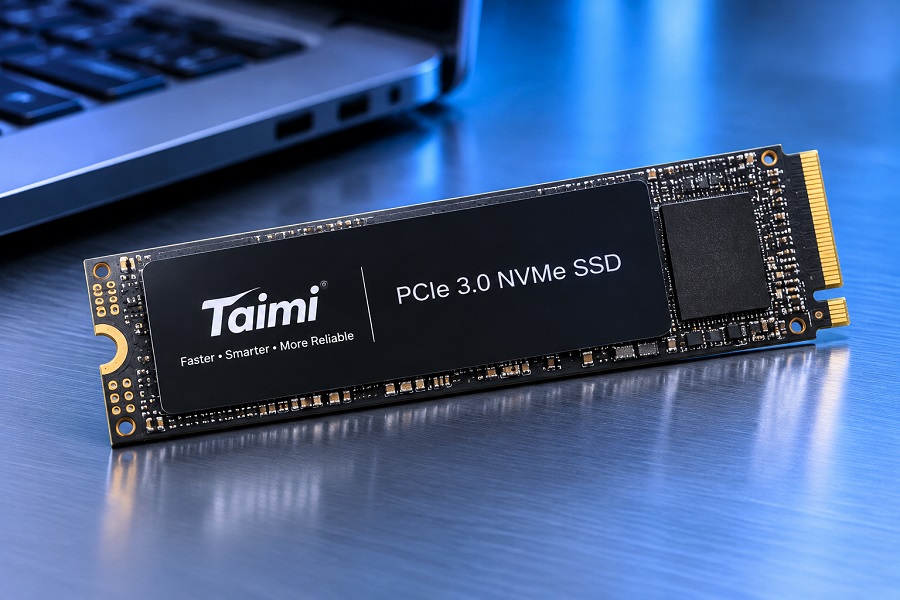
Taimi offers PCIe 3.0 NVMe SSD solutions, including the TME38MBXXX and TME34MBXXX series. These product lines are designed to support different storage requirements for PC builders, distributors, wholesalers, and OEM customers. Available capacities, hardware configurations, and performance specifications vary by series and model.
The TME38MBXXX series delivers sequential read speeds of up to 3,000 MB/s and write speeds of up to 2,900 MB/s, depending on capacity and configuration. It comes with a 3-year limited warranty or the applicable TBW limit, whichever comes first. Its rated endurance ranges from 70 TBW for the 128GB model to 960 TBW for the 2TB model.
If you are evaluating supply partners for your storage product lines, you can review our B2B SSD Procurement Guide: How to Choose a PCIe 3.0 SSD Supplier for Bulk Orders to learn more about supplier evaluation and procurement considerations.
Buyers can contact our team with their required capacities, estimated order quantities, and application requirements to discuss available configurations and bulk quotations. Product specifications, warranty terms, and order details can be confirmed before production.
Looking for a PCIe 3.0 NVMe SSD Supplier?
Whether you are sourcing PCIe 3.0 NVMe SSDs for distribution, PC assembly, or OEM projects, our team can help you review available product configurations and bulk order requirements.
Request a Bulk QuoteFrequently Asked Questions
1. How much does a PCIe 3.0 NVMe SSD cost?
The price depends on several factors, including capacity, NAND flash configuration, controller, DRAM design, firmware requirements, and order quantity. For an accurate quotation, buyers should provide their required specifications and estimated purchase volume.
2. What affects the price of a PCIe 3.0 NVMe SSD?
The main factors include NAND flash type and configuration, SSD controller, DRAM or DRAM-less design, capacity, firmware requirements, testing standards, and order specifications. Different combinations of these factors result in different production costs.
3. Does a 1TB PCIe 3.0 NVMe SSD cost twice as much as a 512GB model?
Not necessarily. SSD prices do not always increase in direct proportion to capacity. NAND density, package configuration, component selection, and product design can all affect the price difference between capacities.
4. Does DRAM affect NVMe SSD pricing?
Yes. Dedicated DRAM adds a component to the SSD design and can influence its overall cost. However, the price difference depends on the complete hardware configuration and product requirements, not DRAM alone.
5. Does buying PCIe 3.0 NVMe SSDs in bulk reduce the unit price?
Bulk orders may offer different unit pricing compared with smaller orders, depending on the product configuration, order quantity, packaging, and production arrangements. Buyers should request a quotation based on their actual order requirements.
6. What information is needed for a PCIe 3.0 NVMe SSD bulk quote?
At a minimum, provide the SSD type, required capacity, estimated quantity, and destination market. If you have specific requirements for NAND, DRAM, performance, branding, or packaging, include those details as well.
Article Tags:
PCIe 3.0 NVMe SSD NVMe SSD Price SSD Bulk Pricing SSD Wholesale SSD Procurement